From barnacles and biofouling communities to emerging coatings and corrosion, ICMCF was a week spent looking closely at what happens when life meets a surface. Berlin offered plenty to notice along the way, with towering architecture, colorful bears scattered throughout the city, schnitzel on the table, and countless little details in between.
A Long Way To Talk About Tiny Things
The journey started in North Carolina, crossed the Atlantic into Amsterdam, and after a few days in the Netherlands, continued by train toward Berlin. There was something fitting about traveling that far to spend a week talking about things that happen at much smaller scales: barnacles settling onto surfaces, microscopic communities taking shape, coatings changing over time, and the quiet interactions between materials and the marine environment.
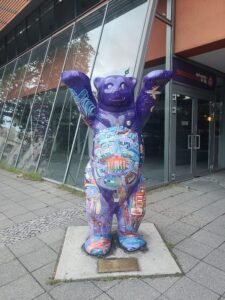
Berlin greeted me with a very blue hotel room, sparkling water at check-in, and an afternoon with nowhere in particular to be. So I walked. There was coffee, good food, enormous buildings covered in details, and my first encounters with the colorful bears scattered throughout the city.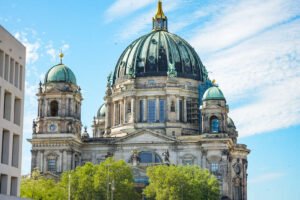
The People Behind The Papers
The first familiar face I encountered at ICMCF belonged to an old friend, now a postdoctoral researcher at the Naval Research Laboratory. Within minutes, catching up turned into introductions, introductions turned into conversations, and the conference was underway.
That pattern continued throughout the week. I listened to talks on biofouling communities, barnacle biology, corrosion, emerging coatings, and new approaches to familiar problems. Even more surreal was meeting researchers whose work I had known long before I knew them. Names I recognized from papers and reference lists suddenly belonged to people sitting across the table, asking questions, sharing ideas, and drinking coffee between sessions.
Where Ideas Meet
Poster sessions have always been one of my favorite parts of a conference. There is something different about standing beside your work and watching a quick question turn into a much longer conversation.
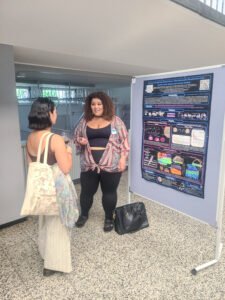
This one stayed busy. I spent most of the session moving between questions about our methods, the visuals, and connections people saw to their own research. Some conversations wandered in directions I hadn’t expected, and several continued long after the poster session itself was over.
By the end of the week, many of the people who had first stopped by as strangers had become familiar faces around the conference. Those conversations, and the connections that grew from them, became one of my favorite parts of ICMCF.
Larger Than Life
Thursday brought my oral presentation.
I walked into one of the largest auditoriums I had ever presented in and looked toward an enormous screen at the front of the room. Soon, the three-dimensional reconstructions and computed tomography scans I had spent so much time examining on a computer were projected at monumental scales.
For a project concerned with seeing what normally remains hidden, the scale felt appropriate.
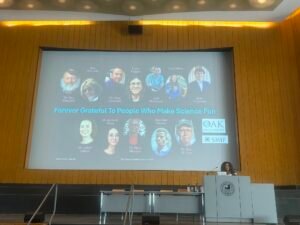 The presentation also gave me an opportunity to share more than the final data. Alongside the CT imagery were pieces of scientific visualization, my biofouling-inspired digitized watercolor artwork, photography exploring the ways people leave traces on their environments, and even a familiar image from my Three Minute Thesis presentation
We get one scan, but can ask many questions
Brittney Mitchell – Oral Presentation | Thursday July 30, 2026
Seeing all of those pieces together on an international stage was special. They represented different parts of the same way I have learned to approach science: look closely, find a way to see what isn’t immediately visible, and then find a way to share it.
From the stage, I could even see phones appearing as people scanned the QR codes linking to my research, collaborators, and website. My work was traveling again, this time without me.
One More Surprise
By the closing day, the conference had begun to feel surprisingly familiar. People I had met only a few days earlier were now faces I recognized across the room, and conversations picked up easily between the final sessions.
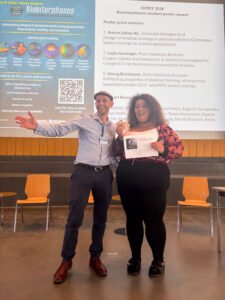
During the closing session, my name was announced for the Best Oral Presentation Award.
Shocked. Speechless. Delighted.
I made my way toward the stage a little bewildered, but very grateful. Receiving the recognition was an unexpected way to close a week that had already given me far more than I had anticipated: new ideas, new connections, and a renewed excitement for the science that had brought all of us to Berlin.
Meet my incredible collaborators below!
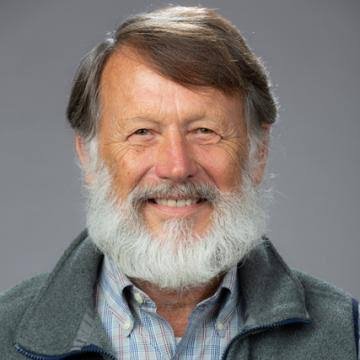
Dr. Dan Rittschof
Faculty advisor and mentor providing guidance across all themes, including barnacle biology, genetics, and experimental design. https://nicholas.duke.edu/people/faculty/rittschof https://www.linkedin.com/in/dan-rittschof-26ab8a6/
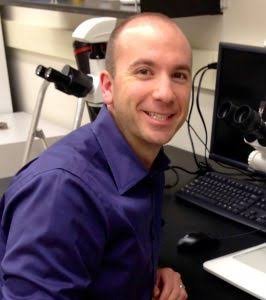
Dr. Gary H. Dickinson
Committee member and collaborator, contributing expertise in barnacle biology and project development. https://dickinson.pages.tcnj.edu/ https://www.linkedin.com/in/gary-dickinson-3b40787/
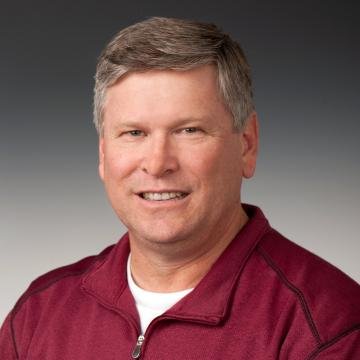
Dr. Thomas Schultz
Committee member and member of the barnacle genetics team, providing expertise in genetics and project guidance. https://nicholas.duke.edu/people/faculty/schultz https://www.linkedin.com/in/tom-schultz-53723053/
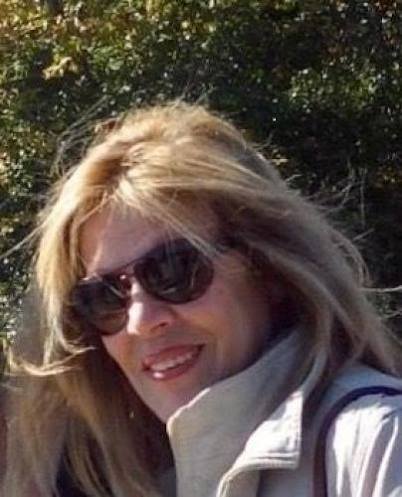
Beatriz Orihuela
Barnacle lab mentor and collaborator, providing expertise in barnacle biology and experimental design. https://nicholas.duke.edu/people/staff/orihuela https://www.linkedin.com/in/beatriz-orihuela-b7a2a13a/
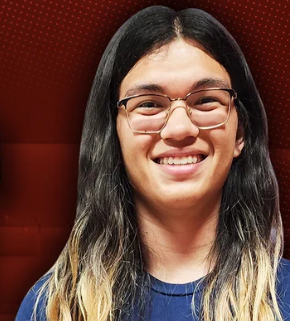
Corin Hoppe
Collaborator on the barnacle research team, contributing to barnacle biology and experiments. https://dickinson.pages.tcnj.edu/people/
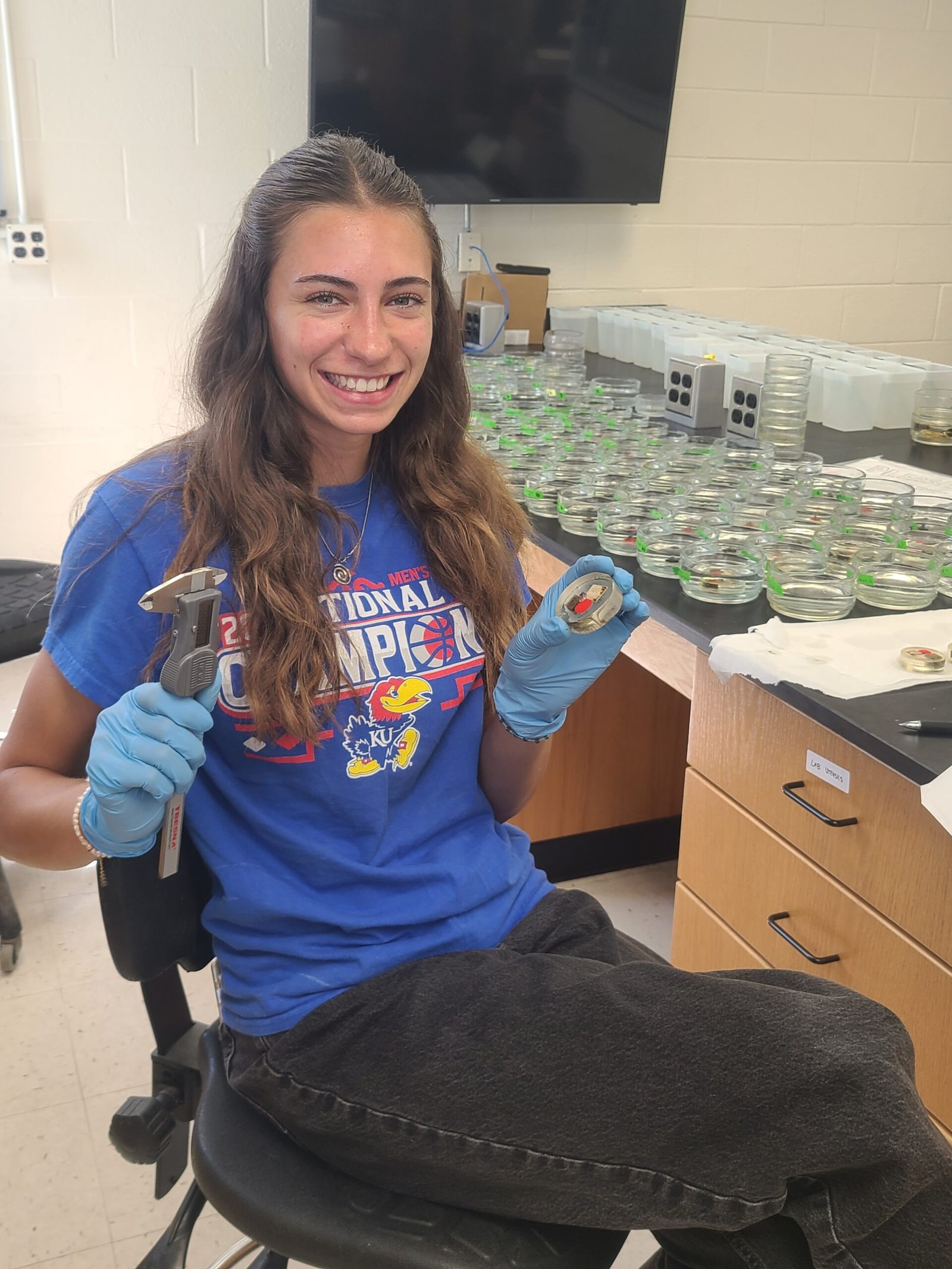
Opal Mohs
Undergraduate researcher contributing to experiments and project development. https://www.linkedin.com/in/opalmohs/
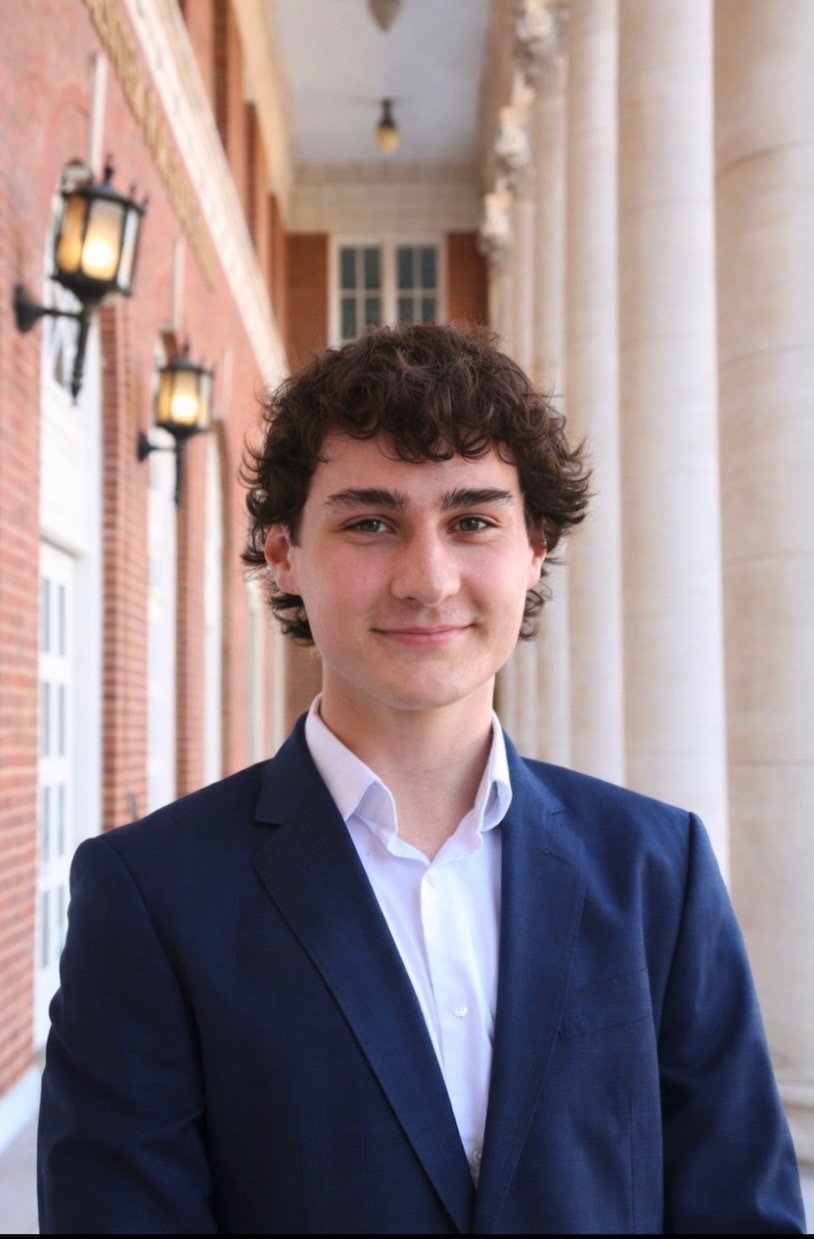
Matthew H. Casavant
Undergraduate researcher contributing to experiments and project development. https://www.linkedin.com/in/matthew-casavant-148052276/
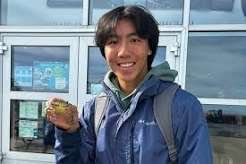
Henry Sun
PhD Student and member of the barnacle genetics team, contributing to genetic analyses. https://nicholas.duke.edu/people/students/sun https://www.linkedin.com/in/henry-sun-691b5a166/ henrysun.netlify.app
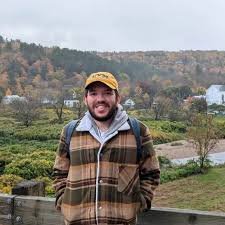
Dr. Daniel Sadler
Member of the barnacle genetics team, contributing to genetic analyses. https://www.uvm.edu/cas/biology/profile/daniel-sadler https://www.linkedin.com/in/daniel-sadler-3991b1a6/
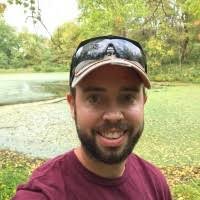
Joshua Matheson
Develops and produces the project's 3D-printed plastic materials. linkedin.com/in/joshua-matheson-b9242516b
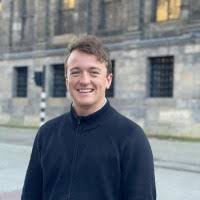
Adrian Estrada-Graf
PhD Candidate and member of the barnacle genetics team, contributing to genetic analyses. https://nicholas.duke.edu/people/students/estrada-graf https://www.linkedin.com/in/aegbiotech/?locale=en
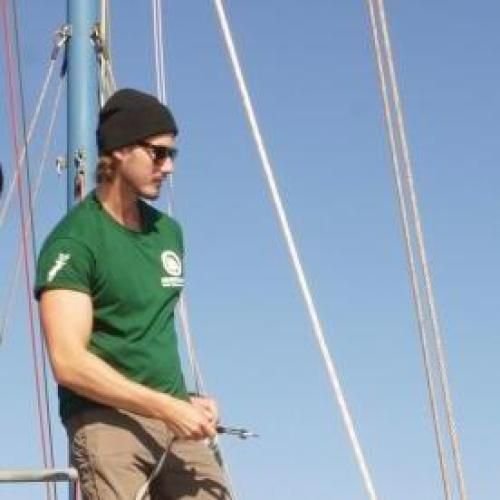
Chris Klein
PhD Candidate and member of the barnacle genetics team, contributing to genetic analyses. https://scholars.duke.edu/person/Chris.Klein
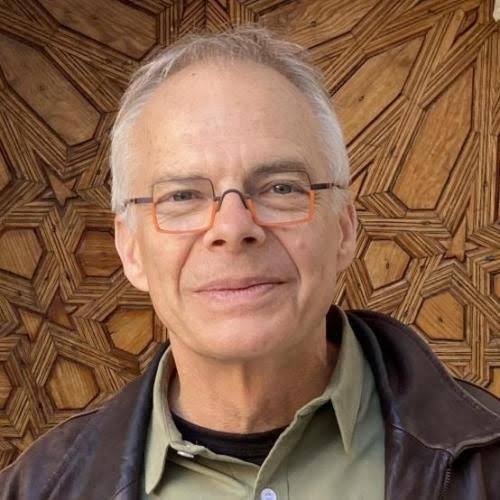
Dr. Mark Wiesner
Member of the plastics aging Team, providing environmentally weathered plastic samples and expertise in plastic weathering. https://wiesner.cee.duke.edu/?_gl=1*1svor8d*_ga*MzY0MjU2NzguMTc4MjE5NTU1Mw..*_ga_0KJWF0FYJR*czE3ODg0ODEwODgkbzckZzAkdDE3ODg0ODEwODgkajYwJGwwJGgw https://www.linkedin.com/in/mark-wiesner-7218037/
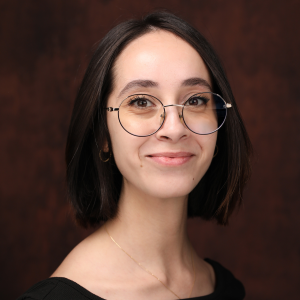
Dr. Aicha El Kharr
Leads the plastics aging effort, providing environmentally weathered plastic samples and expertise in plastic weathering. https://cee.duke.edu/people/aicha-el-kharraf-ph-d/ https://www.linkedin.com/in/aicha-el-kharraf-6089591b3/
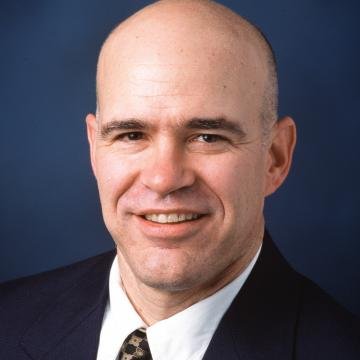
Dr. Daniel Richter
Collaborator using portable X-ray fluorescence (pXRF) to analyze metals in plastic samples. https://nicholas.duke.edu/people/faculty/richter https://www.linkedin.com/in/danieldebrichter/
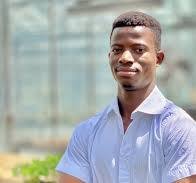
Anselme Dossou
PhD student and collaborator using portable X-ray fluorescence (pXRF) to characterize metals associated with plastic samples. https://nicholas.duke.edu/people/students/dossou https://www.linkedin.com/in/anselme-dossou-0a1195203/
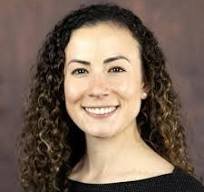
Dr. Laura E. Dalton
Collaborates on machine learning and image segmentation for plastic analyses. https://www.creativengineering.org/ https://www.linkedin.com/in/laura-e-dalton-ph-d-5386a378/