Teaching Experiences, Philosophy & Creations
Teaching Experiences
Teaching Statement
The greatest compliment I could receive as an educator would not be that I taught marine biology or toxicology particularly well. It would be hearing, years later, that I helped someone pursue an opportunity they once believed was not meant for them.
My goal as a teacher is not simply to transfer knowledge, but to help students develop the confidence to see themselves as scientists, communicators, and lifelong learners.Curiosity has shaped every stage of my scientific journey, from falling in love with the ocean while growing up in the California desert to pursuing a Ph.D. in Marine Science and Conservation at Duke University. It also shapes the way I teach.
I believe students learn best when they are active participants in discovery rather than passive recipients of information. My role is to intentionally design learning experiences that encourage students to ask meaningful questions, think critically, communicate effectively, and recognize that science is a creative, collaborative, and evolving process.
My teaching spans marine biology, marine conservation, ecotoxicology, experimental design, and science communication. Throughout graduate school I have taught in a variety of settings, including large lecture courses, discussion-based seminars, laboratory courses, field experiences, undergraduate research, graduate mentoring, and service-learning programs. These experiences have allowed me to work with students from diverse disciplinary backgrounds and at different stages of their academic development, from first-year undergraduates exploring marine science for the first time to master's students and undergraduate researchers designing independent projects.
I have contributed to courses ranging from Marine Megafauna and Marine Mammals to Biodiversity of Marine Invertebrates, Offshore Renewables, International Conservation and Development, and Science Journalism. Teaching across this range of class sizes and formats has reinforced an important lesson: effective teaching is not determined by the number of students in the room, but by creating opportunities for every student to meaningfully engage with the material and with one another.
During Duke University's Summer Course Development Grant program, I began thinking about teaching in a fundamentally different way. Through an intensive course design institute, I explored backward course design, experiential learning, active learning strategies, Bloom's taxonomy, and evidence-based pedagogy while helping develop the Experimental Design and Research Methods Primer for the inaugural Bonaventura Summer Research Fellows Program. Rather than beginning with the question, "What content do I want students to know?" I learned to ask, "What should students be able to do?" That shift has fundamentally changed the way I approach teaching.
I now begin by identifying the scientific practices, habits of mind, and learning outcomes I hope students will develop before designing assessments, activities, and instructional materials that support those goals.This philosophy has also shaped my work as a course designer. Beyond teaching existing material, I have developed original lectures, laboratory activities, course resources, Canvas and Sakai learning modules, and an interactive workbook that guides undergraduate researchers through the scientific method from developing research questions to communicating scientific results. Designing these materials has reinforced my belief that accessibility begins long before students enter the classroom.
Clear organization, transparent expectations, thoughtfully scaffolded assignments, color vision deficiency-friendly graphics, multiple methods of content delivery, and accessible digital resources reduce unnecessary barriers and allow students to devote their cognitive effort to learning rather than deciphering instructions. I strive to minimize ambiguity so that students can focus on engaging deeply with scientific ideas.
As both a scientist and an artist, creativity plays an important role in my teaching. Scientific understanding is strengthened when students are encouraged to view concepts from multiple perspectives. To support different learning styles, I intentionally incorporate diagrams, photography, animations, conceptual models, storytelling, illustration, and discussion alongside traditional lectures. I also encourage students to communicate scientific concepts through creative projects that challenge them to translate complex ideas for different audiences. Whether creating figures, designing presentations, or developing outreach materials, these activities reinforce that effective science depends not only on rigorous research but also on clear and compelling communication.
Learning should also be measurable. I use a variety of assessment strategies to evaluate student understanding while providing opportunities for growth throughout the learning process. Depending on the course, these include reflections, proposal development, discussions, presentations, laboratory exercises, exams, creative science communication projects, and independent research. Rather than relying on a single measure of success, I value assessments that encourage students to apply concepts, synthesize information, defend their reasoning, and communicate their thinking. Frequent feedback allows students to recognize their own progress while giving me opportunities to adapt my teaching to better meet their needs.
My teaching philosophy continues to evolve through reflection, mentorship, and experience. Every course I teach provides an opportunity to refine my approach, experiment with new instructional strategies, and learn from my students. Teaching has also changed the way I conduct research. The same intentionality I bring to designing courses now shapes the way I mentor undergraduate researchers, organize collaborative projects, communicate scientific findings, and develop resources for my laboratory.
Looking ahead, I hope to continue growing as both an educator and course designer by expanding my knowledge of evidence-based pedagogy, universal design for learning, inclusive teaching practices, and science communication. My long-term goal is to build classrooms and research environments where students from all backgrounds feel welcomed, challenged, and empowered to contribute meaningful ideas.
Ultimately, I hope students leave my classroom with more than an understanding of marine biology, toxicology, or experimental design. I hope they leave with confidence in their ability to ask thoughtful questions, solve complex problems, communicate science effectively, and continue learning long after the course has ended. If a student leaves my classroom understanding barnacle physiology or thermal regulation, I have done my job. But if they leave believing they belong in science, and excited to keep exploring the natural world, then I have succeeded as an educator.
Diversity Statement
Science thrives when people with different experiences, perspectives, identities, and ways of thinking come together to ask questions that none of us could answer alone. My commitment to diversity, equity, inclusion, accessibility, and belonging is rooted in the belief that every person brings valuable knowledge to the classroom and laboratory, and that one of my responsibilities as an educator and mentor is to create environments where those perspectives are welcomed, respected, and empowered to contribute.
One of the most important lessons I have learned is that diversity is not simply about bringing different people into the same room, it is about creating environments where different perspectives genuinely influence how we ask questions, solve problems, and learn from one another. Throughout my education, research, travel, and teaching experiences, I have repeatedly found that the strongest ideas emerge when people approach the same challenge from different viewpoints. Those experiences have taught me that meaningful inclusion requires more than representation; it requires intentionally creating spaces where every individual feels comfortable contributing their ideas and where those ideas are valued.
My understanding of diversity has been shaped by experiences both within and beyond academia. Growing up in Southern California, studying marine biology in Northern California, traveling throughout Southeast Asia and Southwest Africa with Semester at Sea, and collaborating with students, researchers, and communities from a wide range of backgrounds have continually challenged my assumptions and broadened my perspective. These experiences reinforced that there is no single pathway into science and no single way to experience or understand the natural world. They also reminded me that curiosity, creativity, and expertise are never limited by discipline, culture, age, or career stage.
Perhaps the greatest lesson I have learned is that everyone has something to teach. Whether collaborating with researchers from different disciplines, working alongside community members, mentoring undergraduate students, or facilitating outreach activities with middle school students, I have found that some of my most meaningful learning experiences have come from listening. Approaching science with humility means recognizing that knowledge exists in many forms and that every interaction offers an opportunity to expand my own understanding. This mindset has fundamentally shaped the way I teach, mentor, and collaborate.
Creating inclusive learning environments requires intentional design. Accessibility begins long before students enter the classroom. Through my work developing courses, educational resources, and laboratory materials, I strive to reduce unnecessary barriers by providing transparent expectations, clearly organized learning resources, accessible digital content and in-person experiences, color vision deficiency-friendly figures, and multiple ways for students to engage with and demonstrate their understanding of course material. Students enter our classrooms with different educational experiences, learning preferences, identities, responsibilities, and levels of confidence. Thoughtfully designed learning environments allow students to devote their energy to engaging with scientific ideas rather than navigating avoidable obstacles.
I also believe that inclusion extends beyond accessible course materials. It is reflected in the culture we create. Whether teaching in a classroom, mentoring in the laboratory, or participating in community outreach, I strive to cultivate environments where questions are encouraged, mistakes are viewed as opportunities for growth, and every individual feels respected as both a learner and a contributor. I emphasize collaboration over competition, encourage open communication, and intentionally create opportunities for students to learn from one another. My goal is for students to recognize that their unique experiences are not barriers to scientific success, they are valuable perspectives that strengthen our collective understanding.
As I continue my career, I hope to cultivate classrooms, laboratories, and research groups where students from all backgrounds feel that they belong, not because they are expected to become the same kind of scientist, but because they are encouraged to contribute their own perspectives, experiences, and ways of thinking. I believe the future of science depends not only on expanding access to research and education, but also on creating communities where diverse voices are genuinely heard and valued. As an educator, mentor, and scientist, I hope to contribute to that future by designing inclusive learning environments, fostering meaningful collaboration, and remaining a lifelong learner myself. After all, diversity is not only about the people we teach, it is also about recognizing the countless people we have the privilege to learn from.
Example Content
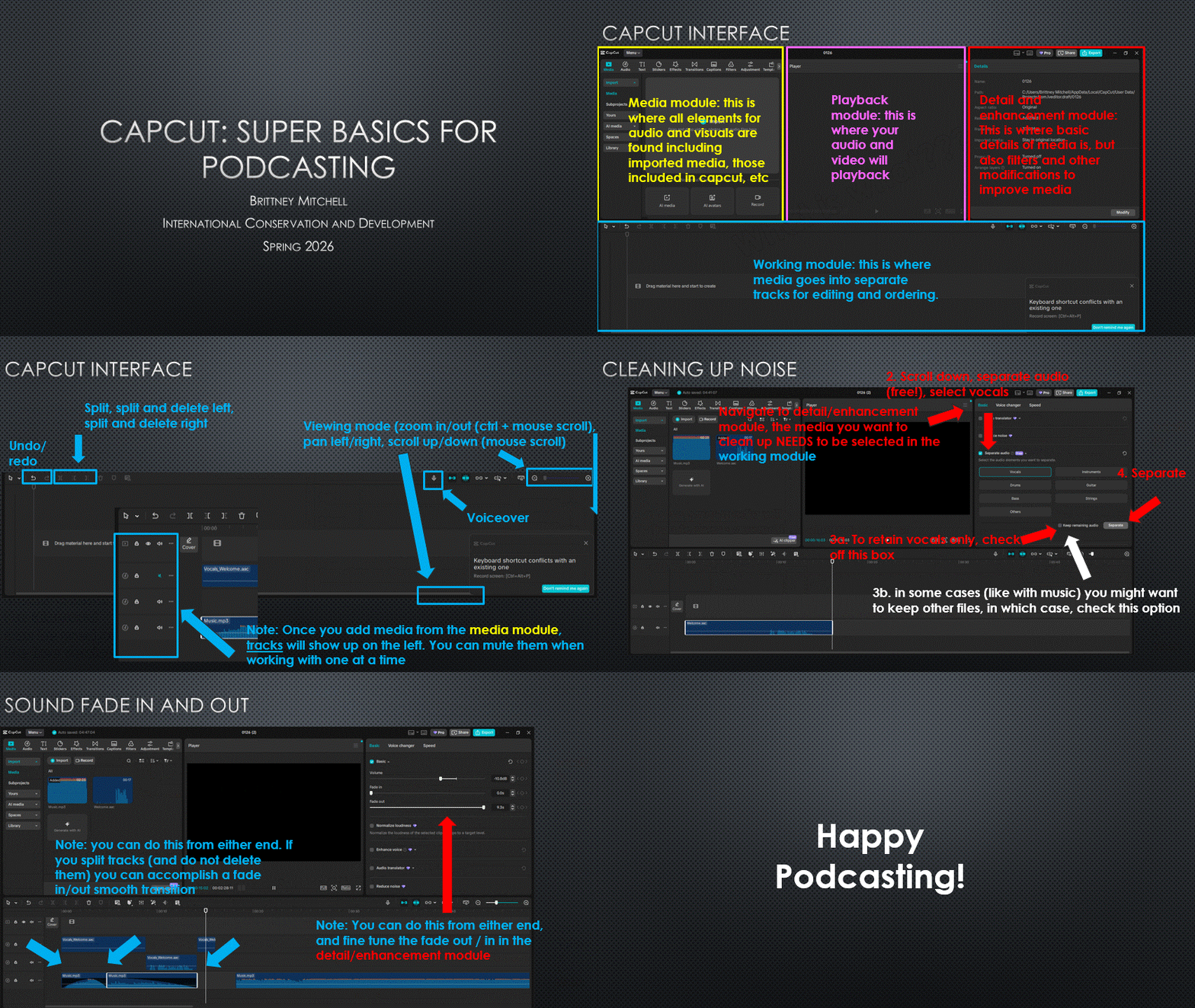
International Development and Conservation Podcast Lab
Guest Lecture in Biodiversity of Marine Invertebrates
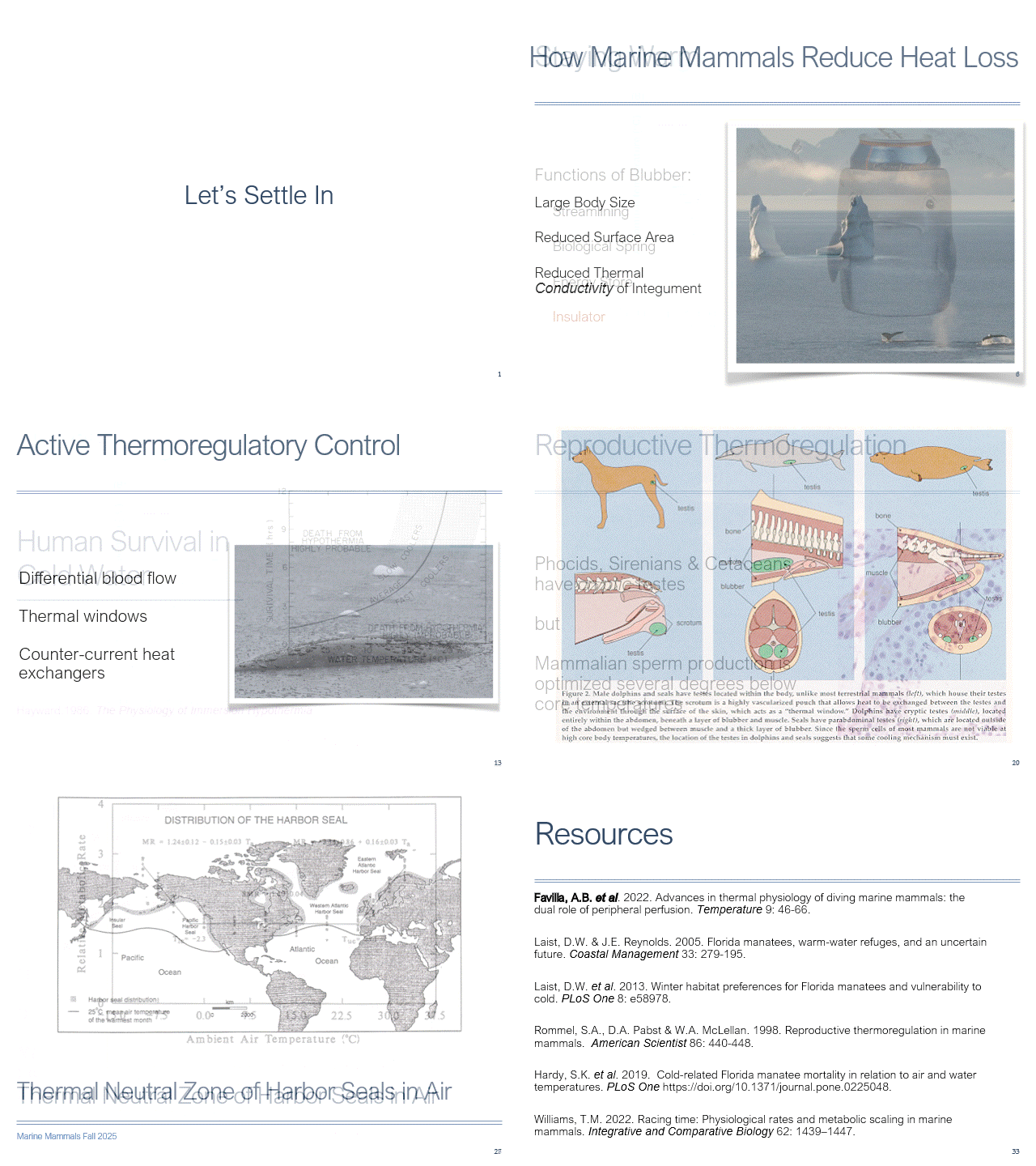
Thermoregulation Lecture for Marine Mammals
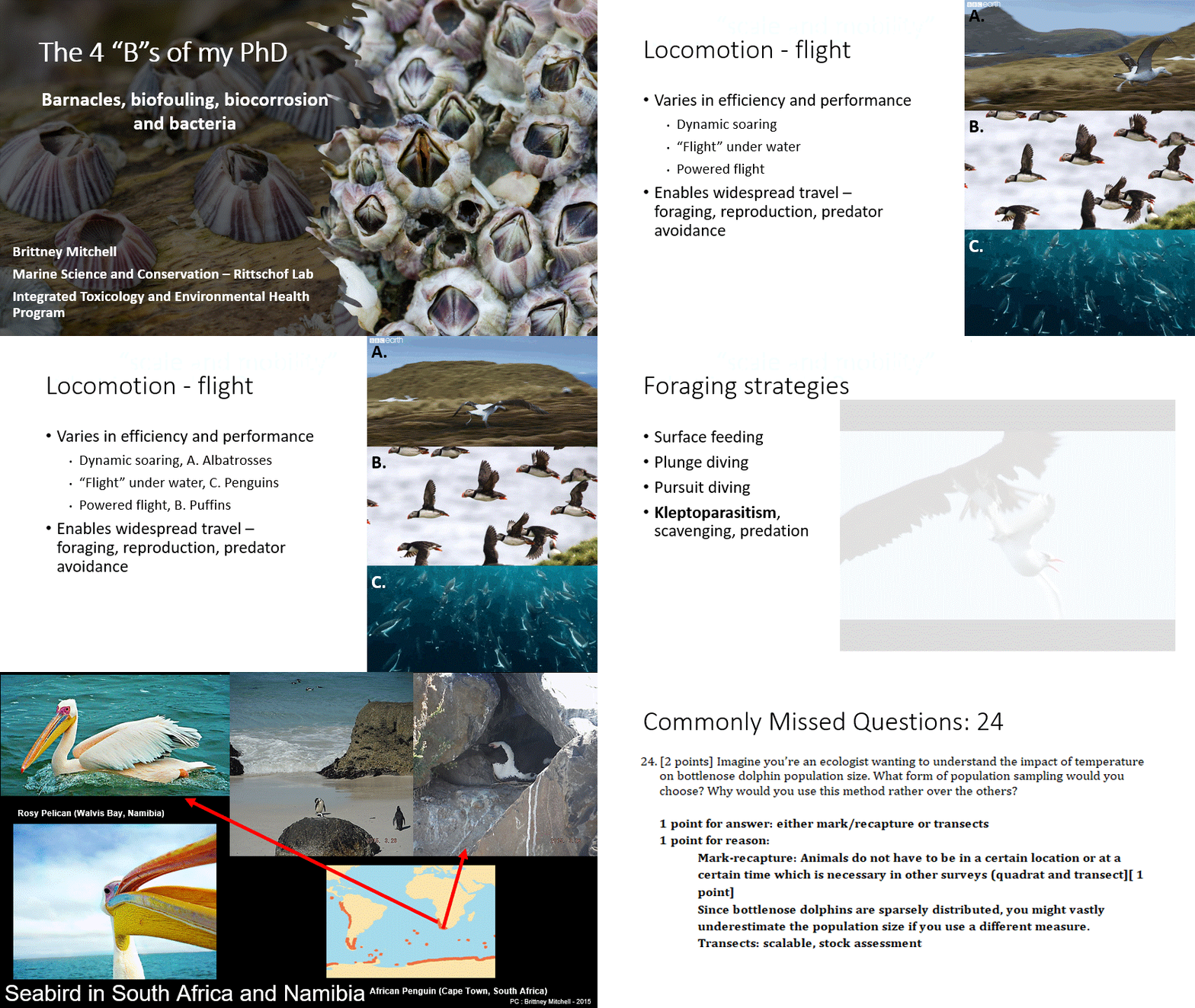
Marine Megafauna Lecture and Intro to My Research
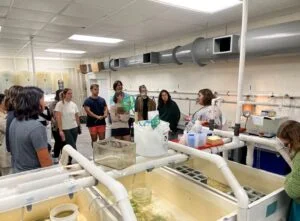
Mentorship Experiences, Values, and Journeys